Healthcare is still largely built around snapshots.
A blood test, a doctor’s visit, a single measurement, a moment in time. These snapshots can be valuable, but they only show part of the picture. Human biology is dynamic. Our bodies change constantly, and yet much of modern diagnostics still relies on isolated data points that are often not connected to each other.
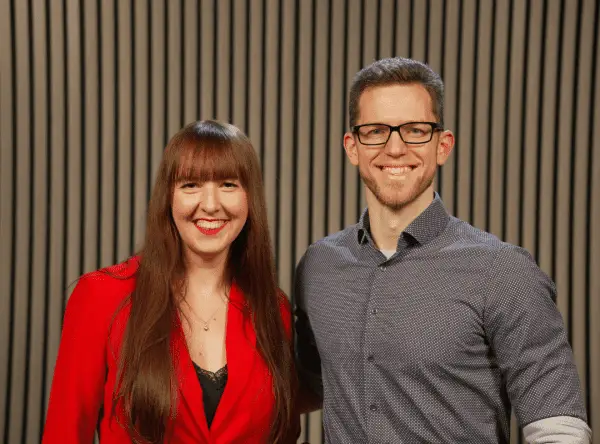
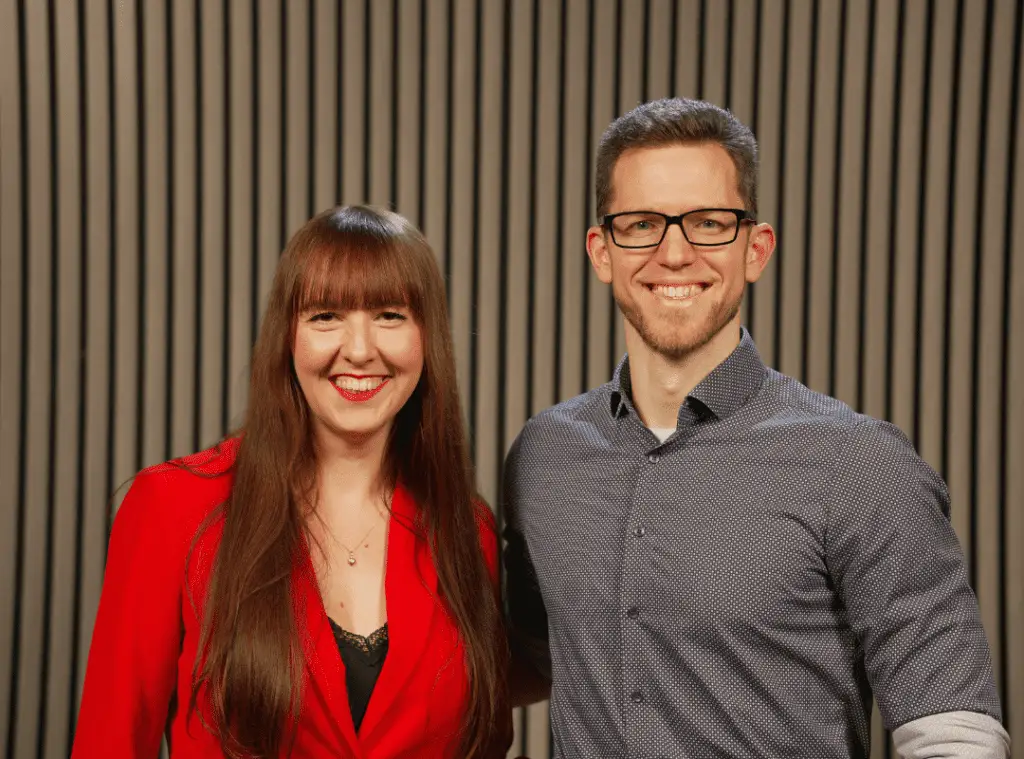
In the second episode of Beyond Outcomes – Clinical Research Unfiltered, Dr. Andreas Beust speaks with Dr. Agnes Musiol, founder of pheal, about a different vision for healthcare: continuous, personalized monitoring that helps people understand what is happening in their bodies before problems escalate.
The conversation is not only about technology. It is about the founder journey, the realities of medical device innovation, the role of regulation, the struggle for funding, and the courage needed to build something new in a healthcare system that often moves slowly.
A founder who never planned to become a founder
Agnes Musiol did not grow up with the goal of becoming an entrepreneur. Her original passion was research.
Already at school, she became fascinated by human biology, molecular processes, and the question of what happens inside the body when people become ill or stay healthy. She imagined a future in academia, perhaps as a professor or researcher. But when she entered university, reality felt different from what she had expected. Research, as she experienced it, was often less about discovery and more about publications, structures, and academic pressure.
After completing her PhD, she moved into clinical research, hoping this would bring her closer to innovation and patient impact. But here, too, she encountered frustration. Clinical research was essential, but often dominated by bureaucracy, documentation, and regulatory requirements. All of these elements are important, but Agnes felt that the system left too little room for the central purpose: improving healthcare for patients.
That frustration became a turning point.
When she met her co-founder through the Osnabrück Healthcare Accelerator, she did not initially approach the situation as someone looking to start a company. She simply wanted to help. She knew that many founders struggle with the clinical research and regulatory side of healthcare innovation, so she offered her support.
His answer changed her path: “You can help me by doing this with me.”
Agnes describes the decision as something she did not overthink. She did not spend much time calculating the risks of leaving a secure position or stepping into an uncertain startup journey. The problem felt important enough, the idea felt meaningful enough, and she jumped in.
The idea behind pheal: moving beyond snapshots
The core idea behind pheal is simple but ambitious: healthcare should not depend only on isolated measurements.
Agnes compares today’s healthcare system to snapshot diagnostics. A patient visits a doctor, receives lab values, and those values represent one moment. But biology is not static. Processes in the body evolve over time. A single lab result may show whether a value is within a known range, but it does not show how that value changes, how quickly it changes, or what pattern may be emerging.
This is where continuous monitoring becomes powerful.
The vision behind pheal is inspired partly by the idea of a dashboard. In a car, sensors continuously provide information about speed, fuel, tire pressure, or engine status. The driver does not need to wait until something breaks to receive information. Agnes and her co-founder asked: why do we not have something similar for the human body?
The aim is not simply to collect more data. The aim is to translate the body’s “molecular language” into meaningful information that can support prevention, early intervention, and more personalized healthcare.
Smart patches and molecular signals
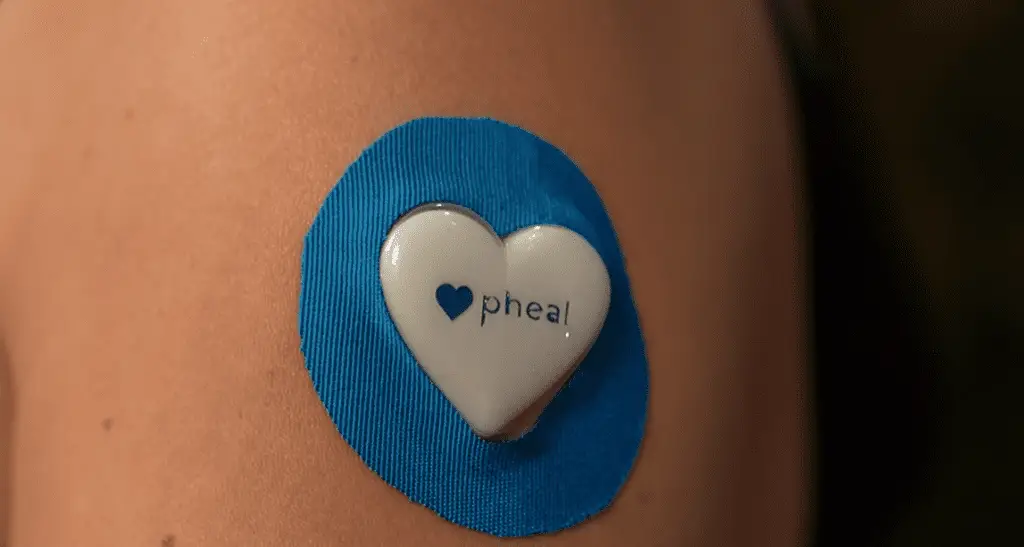
pheal is developing smart patch technologies that can measure biological parameters continuously. Similar to continuous glucose monitors, the concept is to collect data over time rather than relying on single measurements. But pheal’s vision goes beyond glucose.
The company is working on systems that can measure different parameters depending on the use case. Examples discussed in the episode include sodium, potassium, troponin, lactate, and other biomarkers. Depending on the application, measurements may be taken from sweat, interstitial fluid, or capillary blood.
The technology relies on biochemical sensors that can detect specific molecules and translate them into concentration values. While medicine already knows a lot about healthy and unhealthy concentration ranges, what is often missing is knowledge about dynamics: how values develop over time in real life.
This is where continuous monitoring could create entirely new insight.
For example, in chronically ill patients, a smart patch could act as a support system that identifies when a parameter begins to move in a concerning direction. Instead of waiting until symptoms worsen, the system could alert the patient and potentially share relevant information with a physician.
Agnes emphasizes that different patients and different diseases require different parameters. A heart failure patient may need a different sensor combination than a patient at risk of sepsis or someone being monitored for hydration or metabolic changes. Therefore, pheal is building its system as a platform: the outer structure remains similar, while the sensor components can be exchanged depending on the monitoring need.
A platform approach to medical sensing
One of the central challenges in biosensor innovation is that many sensors work well in research settings but never become usable products. They may function in the lab but are not optimized for the body. They may work for only a few hours. They may be too expensive, too bulky, or too difficult to use in real life.
pheal’s platform approach aims to address these issues.
The company is developing reusable electronics combined with exchangeable sensor components. This reduces waste and allows different sensor configurations to be used within a broader system. In one research-oriented version, sensors are integrated into a card-like element that can be exchanged when needed. In other versions, the design is more flexible, thinner, and closer to what a patient could comfortably wear on the body.
For Agnes, usability is not a secondary concern. A device that works technically but is uncomfortable, impractical, or too expensive will not reach patients. That is why the team thinks about real-world use, cost, and patient handling from the beginning.
This includes what Agnes calls “design to cost.” Many research institutes create impressive technologies that never reach the real world because they are simply too expensive. pheal wants to avoid that trap by developing technology that can be both scientifically meaningful and practically usable.
Research, product development, and the startup reality
The conversation also highlights one of the most difficult tensions in healthcare startups: the balance between scientific ambition and commercial reality.
Agnes sees enormous potential for continuous biomarker data in research. Such data could help generate real-world evidence, improve understanding of disease dynamics, and support more personalized treatment. But as a founder, she also has to build a viable company.
Investors are rarely convinced by the idea of “doing something good for the world” alone. A startup must show a path to revenue. This creates pressure to identify early use cases that are useful, feasible, and commercially viable.
Agnes is clear that pheal does not want to simply sell biomarker tracking to the biohacking market because it could generate money. The team wants to focus on use cases where the technology can genuinely help people. Hydration monitoring, for example, is one area where the company sees practical value and an opportunity to create an early product while continuing to build toward more advanced medical applications.
At the same time, the company is working with university hospitals and research partners to validate sensors, collect data, and test the technology in realistic settings. Sweat monitoring is one area of particular interest because it offers a non-invasive way to access health information. However, it also brings technical challenges: people sweat differently, sweat may need to be induced, and the patch itself creates a specific microenvironment on the skin.
These are not problems that appear only at the end of development. They must be considered from the beginning.
Competition, collaboration, and the value of data
Although pheal is working in an emerging and potentially competitive field, Agnes does not view other companies primarily as competitors. The field is still young, and the market still needs to be built.
Her view is that companies working on continuous health monitoring can either slow each other down or help move the field forward together. Since the potential applications are broad, she believes there is enough space for multiple players.
However, she also points to a major challenge: data ownership.
Continuous monitoring could generate extremely valuable health data. If that data remains locked within individual companies, society may lose an opportunity to learn from it at scale. In an ideal world, aggregated and responsibly handled data could help researchers understand disease development, prevention, and personalized treatment much better. In reality, commercial interests and data silos may make this difficult.
This creates a broader question for the future of digital health: how can we balance commercial development with collective learning?
Regulation: protecting patients without blocking innovation
Regulation is one of the recurring themes of the episode.
Agnes is clear that patient safety is essential. But she also argues that overly rigid regulatory pathways can paradoxically harm patients by slowing down innovations that could improve healthcare.
From her perspective, Germany and Europe often focus heavily on risk avoidance. The intention is to protect patients, but the result can be that promising technologies struggle to reach clinical testing or practical use. For startups, this is especially difficult because they often need early patient feedback and real-world data to develop meaningful products.
Agnes would like to see more structured opportunities to work together with patients earlier, as long as safety has been demonstrated. She does not argue for removing regulation, but for smarter pathways that allow safe, early testing and learning.
She also sees signs of change. Discussions around preventive healthcare, digitalization, disruptive medical sensors, and real-world data are becoming more prominent. Regulatory bodies and funding programs are beginning to acknowledge the need for new approaches. Still, the process remains difficult, especially for startups trying to navigate medical device development in Europe.
Wellness, medical devices, and the blurred line in between
A major topic in the conversation is the distinction between wellness products and medical devices.
Wearables such as rings, watches, and health trackers already provide people with information about sleep, activity, heart rate, or general recovery. Some of these tools may not meet the standard of clinical diagnostics, but they can still help people become more aware of their health.
Agnes argues that consumer health should not automatically be seen as a threat to medicine. If a wellness tool helps someone notice unhealthy patterns, improve behavior, or take better care of themselves, it can still have value.
At the same time, she acknowledges the problem of overpromising. Startups and health tech companies sometimes present wellness features in a way that sounds close to medical prevention, even when the evidence is not yet strong enough. This creates confusion for consumers and raises legitimate regulatory questions.
The challenge is to build a pathway where useful consumer health tools can evolve responsibly, generate evidence, and eventually support medical applications without misleading users.
Prevention and personalization as the future of healthcare
For Agnes, the long-term potential of technologies like pheal lies in prevention and personalization.
Healthcare systems are under pressure. Populations are aging, costs are rising, and many systems still focus more on treating disease than preventing it. Continuous monitoring could help shift part of the system toward earlier detection and more individualized support.
Instead of giving everyone the same general advice, future systems could provide recommendations based on a person’s own biological patterns. This could be relevant for nutrition, exercise, chronic disease management, therapy monitoring, or early warning signs.
In clinical research, this type of data could also support more targeted trials and better patient stratification. As medicine becomes more individualized, biomarkers and longitudinal data may help identify which patients are most likely to benefit from a certain treatment.
The vision is not a world where everyone becomes obsessed with tracking every parameter. It is a world where relevant data is used intelligently to support better decisions.
Female founders, visibility, and changing the system
Toward the end of the episode, the conversation turns to Agnes’s experience as a female founder in a tech-driven space.
Agnes does not present a simple narrative. She acknowledges that she has faced sexism, dismissive comments, and structural challenges. At the same time, she tries to focus on the positive and continue moving forward.
She also speaks openly about being more introverted than many people assume. Being on stage does not give her energy; it costs energy. But she does it because visibility matters. After talks, young women often approach her and say that seeing her on stage encouraged them to pursue a similar path.
For Agnes, this is reason enough to keep speaking publicly.
Her message is that women should not remain in the background simply because they are uncomfortable taking the stage. Representation matters, and sometimes people need encouragement to step forward. The more women are visible in science, technology, startups, and healthcare innovation, the more normal it becomes for others to follow.
A call for more courage
The episode closes with a broader reflection on Germany and innovation.
Agnes believes Germany has many smart people, strong engineers, and promising ideas. But too often, ideas are slowed down by hesitation, fear, and excessive focus on what might go wrong. Her call is for more courage, more optimism, and a stronger willingness to build.
Healthcare innovation is difficult. Medical device development is slow. Funding is hard. Regulation is complex. But none of these challenges should stop people from trying to improve the system.
pheal’s journey reflects many of the tensions that define modern healthcare innovation: research versus product, safety versus speed, wellness versus medicine, data ownership versus collective learning, and ambition versus realism.
At the center of all of it is a simple idea: if we want better healthcare, we need to understand the body not only in snapshots, but over time.
Watch the complete episode of our podcast on YouTube:
Now available on all podcast platforms: